The Barista Knows Your Order. Your Server Knows Your Username.
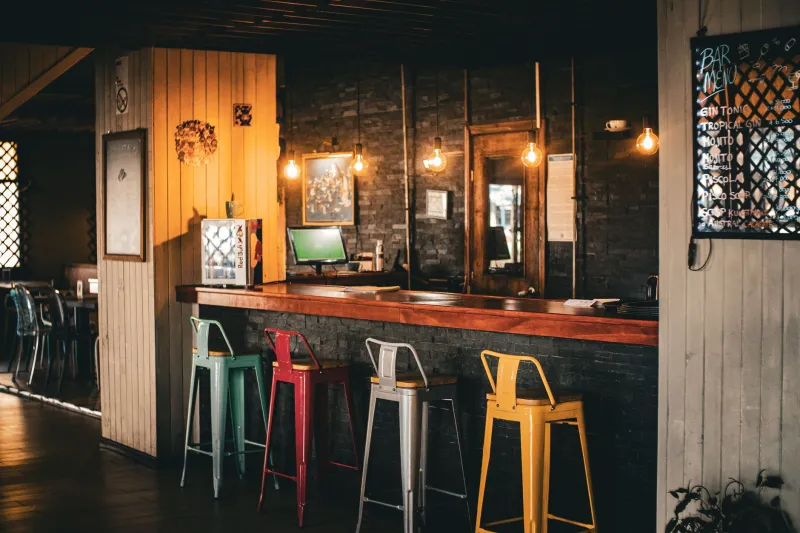
There's a coffee shop in Portland where the owner keeps a shelf behind the counter for regulars' favorite mugs. Not for sale. Not branded merch. Just mugs — each one assigned to a person who shows up enough that the barista stopped asking for their name around month two.
Sociologist Ray Oldenburg called places like this "third places": the spots that are neither home (first) nor work (second), but where the real texture of civic life gets woven. Barbershops, diners, bowling leagues, the corner bar from Cheers. Oldenburg argued these spaces were essential infrastructure — low-stakes, unstructured, open to whoever wandered in.
By the 2010s, the obituaries were everywhere. Bowling leagues died, malls hollowed out, and Robert Putnam's Bowling Alone became required reading for anyone anxious about American loneliness. Then something funny happened. The third place didn't die. It packed its bags and moved to a server you can join with a click.
The Great Migration Nobody Planned
Ask anyone under 35 where their community lives and you won't hear "the neighborhood" very often. You'll hear about a Discord server for a video game you've never played. A group chat that's been running since high school. A subreddit that functions like a small town with better search functionality.
This isn't laziness or screen addiction, though those are the easy explanations. It's a rational response to a country where the third places physically vanished. The independent coffee shop got bought by a chain. The local bar became a condo. The bowling alley became an Amazon fulfillment center. When the physical infrastructure of casual community disappears, people build their own.
And honestly? Some of these digital spaces are good at it. A well-run Discord server has everything Oldenburg praised: regulars who know each other, inside jokes that accumulate like patina, a hierarchy that's social rather than official, and a low barrier to entry. Nobody cards you at the door. Nobody asks what you do for a living.
What Gets Lost in Translation
But here's where the analogy starts to creak.
A great neighborhood bar does something subtle: it forces you to share space with people you didn't choose. The guy two stools down might vote the opposite way, root for your rival's team, or have opinions about jazz that offend you. You learn to coexist. Maybe you even learn to like him. Sociologists call this "weak ties," and research going back decades suggests they're disproportionately responsible for things like job opportunities, civic trust, and general tolerance for other humans.
Digital third places are mostly built on strong sorting. You join the server because you already love the thing. Algorithms and self-selection mean you rarely bump into anyone you didn't opt into. The mug shelf behind the counter becomes a filter bubble with better emoji support.
There's also the ownership problem. The barista with the mug shelf can't be acquired by a Fortune 500 company and have the whole vibe reorganized around quarterly engagement metrics. Your favorite Discord server can. And increasingly, it is — moderators burning out, communities monetized overnight, the "regulars" discovering that the landlord was a platform all along.
Designing for the Door That Stays Open
So what would it look like if someone built a digital space with a bartender's instincts instead of a growth hacker's?
Start with hospitality as a design principle. A good bar has someone whose entire job is making people feel welcome — and, crucially, protecting the regulars from people who ruin the room. That's moderation, but framed as care rather than enforcement. The best community managers I've talked to describe their work less like policing and more like hosting a dinner party where the guest list is infinite and the kitchen never closes.
Then there's the unstructured time. Coffee shops work because nothing is scheduled. You show up, and whatever happens, happens. Most platforms are allergic to this — every minute must be optimized, every interaction nudged toward content creation. But the magic of a third place is the ambient hangout: the voice channel where nobody's presenting, the thread that's just five people arguing about breakfast sandwiches. If your metrics can't capture it, that might be a metrics problem.
Finally: mixed company. The most radical thing a digital third place could do is engineer a little friction with difference — shared spaces where the gaming server overlaps with the gardening server, where you occasionally have to be a neighbor to a stranger. Not the chaos of a public reply section, which is less a town square than a stadium with everyone screaming. Something gentler. A front porch, maybe.
The Mug Shelf, Digitized
The coffee shop in Portland is still there. The owner told a local reporter that her regulars organize carpools in a group chat now, and half of them met her through a neighborhood Discord before they ever walked in. The third place, it turns out, isn't a location. It's a practice — repeated, unglamorous, and portable.
The platforms that understand this will stop designing funnels and start designing rooms. Rooms with bad art on the walls, a regulars' shelf, and someone at the door who's genuinely glad you came back.
That's not a feature roadmap. That's just being a good host. Turns out we've known how to do it for a hundred years — we just forgot which building to do it in.